

I was fortunate to be able to attend the 2024 Combatives Association Summit held at American Top Team in D’Iberville, MS on September 20-22, 2024. This is the second annual Summit, with last year’s being held in Auburndale, FL. I presented a talk and practical session called Performance and Longevity: A Process Based Approach during the first summit, and I also served as videographer and photographer for that event.
If you saw the official 2024 Combatives Association Summit t-shirt, you’ll recognize this now iconic Jerry Wetzel’s biceps photo.

For this year’s Summit, I arrived on the second day and missed some great presentations that I was hoping to be able to catch. Craig Douglas is a master presenter and I was looking forward to seeing his training block. Matt Pranka also presented a block on dry fire this year, after attending the conference last year as a participant, and I was looking forward to seeing his presentation.
The Summit is expertly organized by John Valentine and his wife, Noré. I’ve been around the self defense world as an instructor for a while, and there is no other training event like it in the consistent quality of instruction, coaches who root their material in fundamental principles, and the high level of professionalism by trainees. The Summit is quite simply filled with good, passionate people who are serious about refining their craft – whether as a presenter or participant.
Lots of people have posted write ups, photos, and videos from the Summit so I won’t go in depth. (Your main resourse for the Combatives Association is the Facebook Group which is open to anyone wanting to learn and egnage in thoughtful discussion.) But I would like to record some of my thoughts as a coach and self defense instructor that popped into my head throughout the weekend.

Kerry “Kato” Murakami put together a great training block over dealing with an armed opponent. The cool thing about what he did is that he structured nearly the entire two hours on working off of a Russian tie.
The Russian tie (or two on one) is extremely useful not only in the context of fighting with or over a weapon, but fundamentally in terms of stabilizing the clinch to move closer to a favorable endstate. He taught some simple inside and outside sweeps and reaps, and everyone got lots of reps dealing with the situation and maintaining control once the opponent was on the ground.
The value for me in Kato’s block was opening my eyes to working off of a position like a Russion tie and fully exploring the options availalbe from that position. The context can be fluid depending on who the students are, but getting comfortable working off a single “starting point” can help give training a boost when clinch work starts to feel stale or reduntant in class since we all have our preferences or habits in terms of how we initiate drills and training.

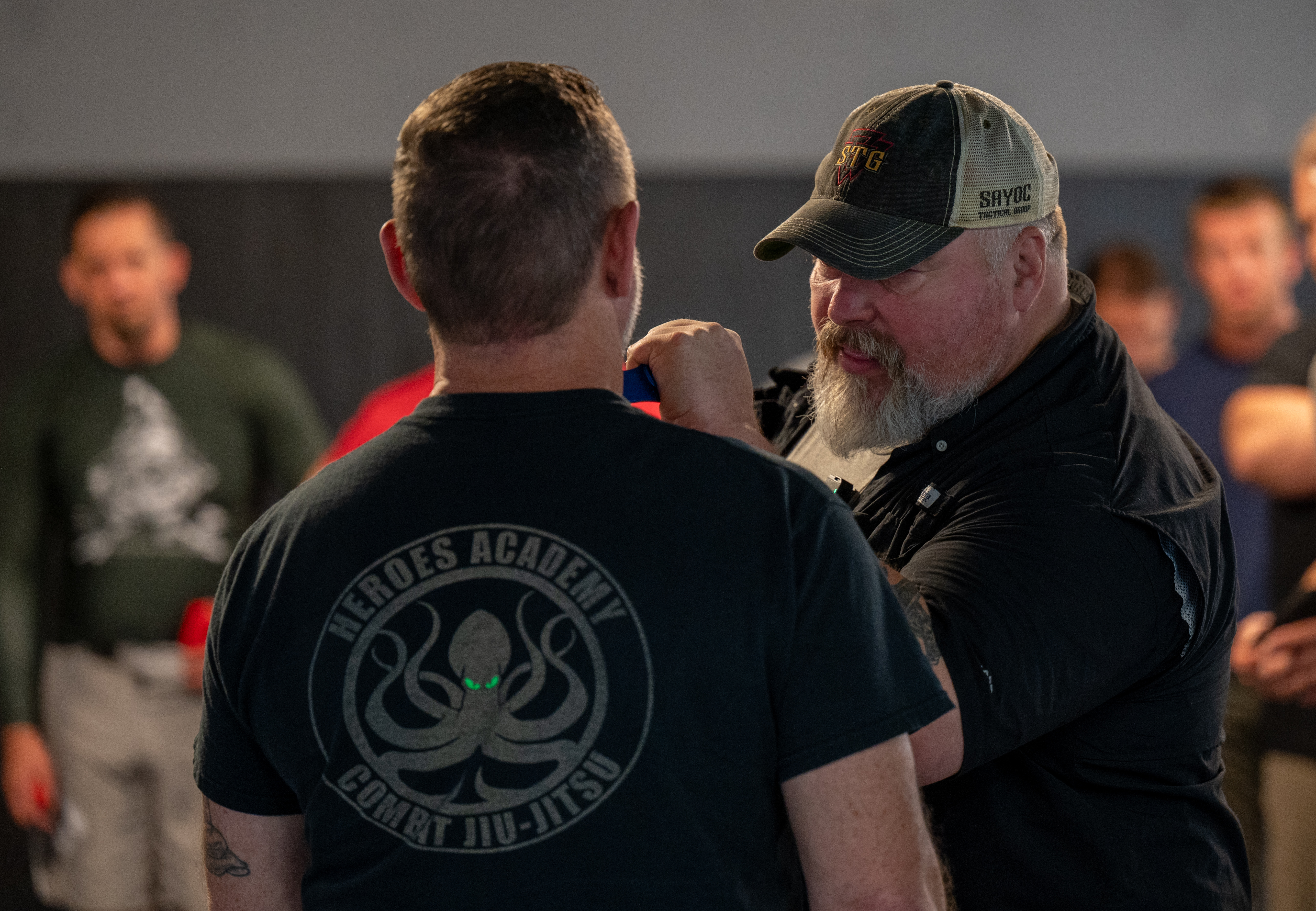
Tom Kier presented a block called “Blade Dynamics: Sayoc Tactical Knife Fighting.” This was my first time seeing Tom present and I have very little experience with any of the “knife fighting” arts. I did one seminar back in 2015 when Ryan Hoover and Doug Marcaida did a joint series of seminars and I’ve dabbled with stuff over the years, but ultimately decided that spending significant amounts of training time on a specific weapon wasn’t really my thing.
Tom spent a lot of time discussing reaction time and the lag between perception/recognition of a problem, decision making, and action. He gave a good demonstration using a makeshift table and some cash to show how action is always faster than reaction. These are concepts that I can probably safely assume were not new to nearly everyone in the room, but it was good to see the concepts working in real time. Tom then presented some of the Sayoc “templates” and everyone drilled them, ending with a more live drill that invovled the concepts that were familiar to Summit attendees.
A fairly obvious thing that I kept thinking about is the lack of focus during self defense training on everything that happens pre-contact. It’s something that we all pay lip service to, that a very small minority of people train very effectively, and that most of us don’t expose ourselve or our students to enough outside of attending a course like Shivworks ECQC. Like in a lot of things in life, well developed soft skills are more rare and harder to develop than we like to think.
To summarize: talking, de-conflicting, and maintaining some measure of control in a highly stressful situation should be the gold standard. Losing the “initiative,” so to speak, leads to a shittier outcome than maintaining some control – primarily over yourself. So to keep it simple for myself and my students, I thought I’d start to focus on a simple rule in deciding when it’s time to get physical:
If you lose the initiative, you’ve got to go first.
To me, that clarifies the path forward for any individual student.
Do you have the skills to maintain initiative and control over yourself?
If physical violence becomes necessary, do you have a good understanding of “when and how?”
Do you have the hard skills to win?
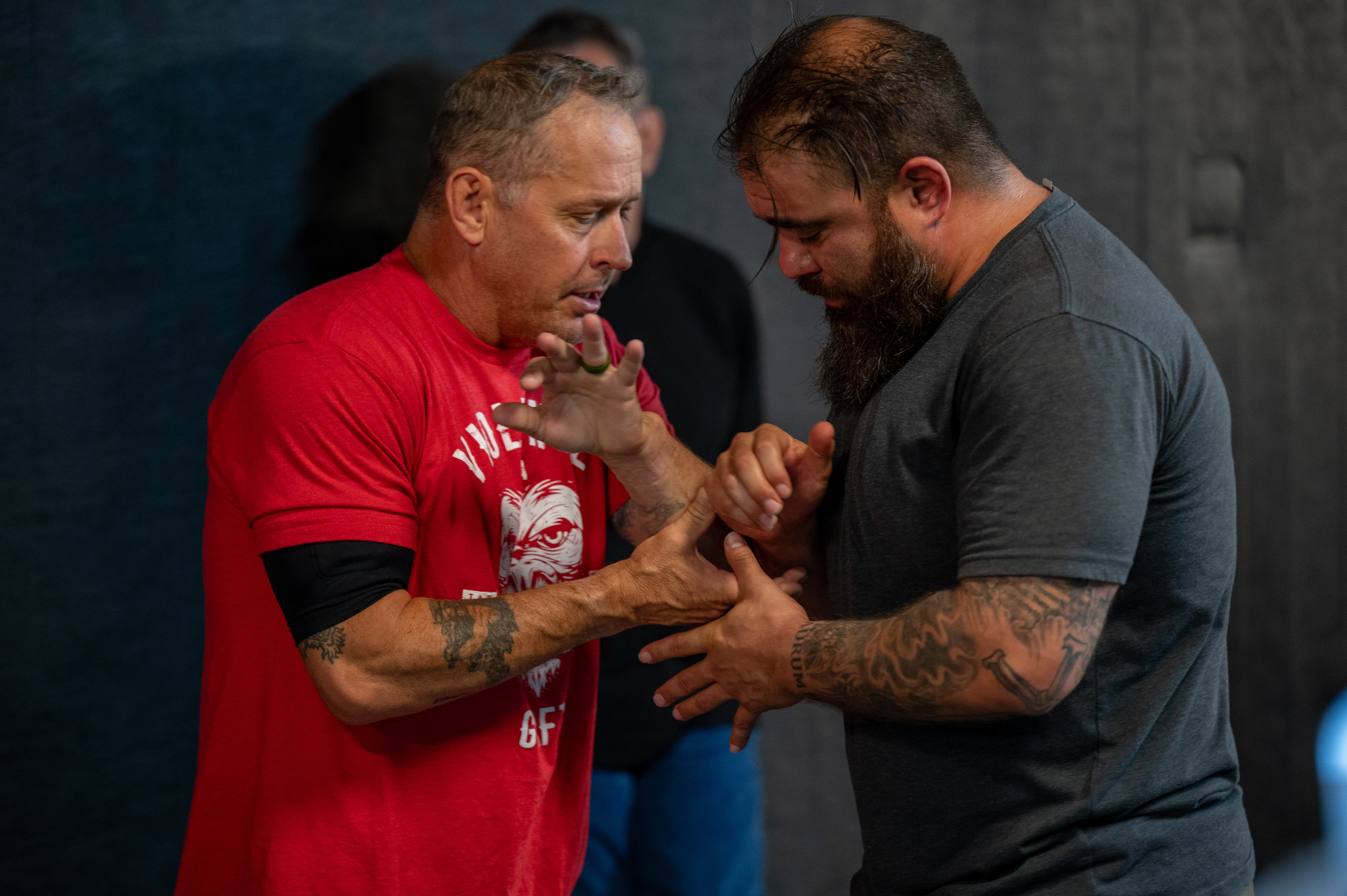
Cliff Byerly’s training block was called: “Tactical Catch Wrestling: Using Pins or Rides in a Weapons-Based Environment.” This is one where I learned the most in terms of “new” positions that I could put into practice right away. Cliff took participants through a series of leg rides that have an interesting application for dealing with fighting when weapons are or may be present. Specifically, a crab ride position in which you’re on an opponents back who has ended up mostly proned out on the ground.
In that instance, most people would go to a mount, sitting on the hips or torso while smothering the shoulders and head to prevent getting rolled off or the opponent getting up. The obvious problem here is that if you’re going to maintain that mounted position on a face-down opponent, you’ll have to bring your torso, chest, and head down to maintain as much control as possible. Weapons you’re carrying on your belt become much harder to access (or totally inaccessible), and you’ve lost the ability to see what’s going on around you.
If instead, you “ride” the back of the opponents legs, in a “butterfly” position with shins across the opponent’s hamstrings, knees outside the legs, and feet in between the legs, you’re able to limit the opponents options – he can only move effectivly by pushing straight up and back into you – you maintain access to your weapons, and you maintain the ability to see your surroundings. If and when the opponent tries to come up to his knees, it’s a very easy transition to break him down to his hip. Very solid stuff.
I drove home the next day and we worked off of that position in our Monday self defense class at Iowa Park Jiu Jitsu Club. It worked well as our students are used to side smash and leg ride guard passing. We added knives, guns, and pressure, and I was really happy with how training went that night.
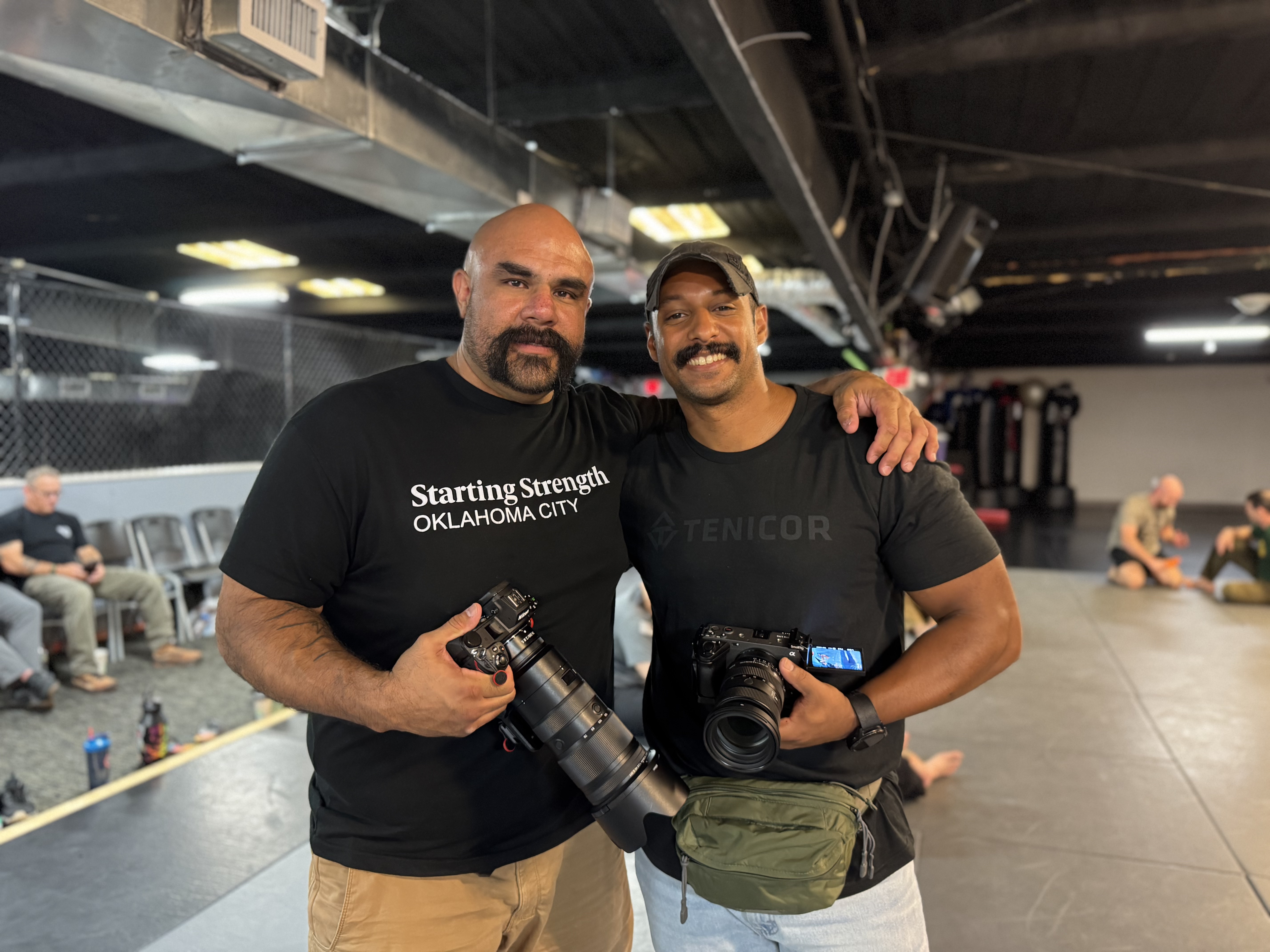
Next year’s Combatives Association Summit will be held in D’Iberville again. Registration is open and there is an early bird special if you sign up soon. If you can only make one self defense training event next year, you should seriously consider going.
Info and sign up links for the Summit can be found here: https://combativessummit.com
The Iron Sights Podcast was on-sight all weekend recording episodes with instructors and presenters. I’ll be on a future episode that we recorded during the Summit. Scott and crew are fantastic. Outside of Starting Strength Radio and other Starting Strength Coaches, I don’t know of any other fitness podcast I’d recommend. Check them out here: https://ironsightspodcast.com
 Lift. Fight. Win.